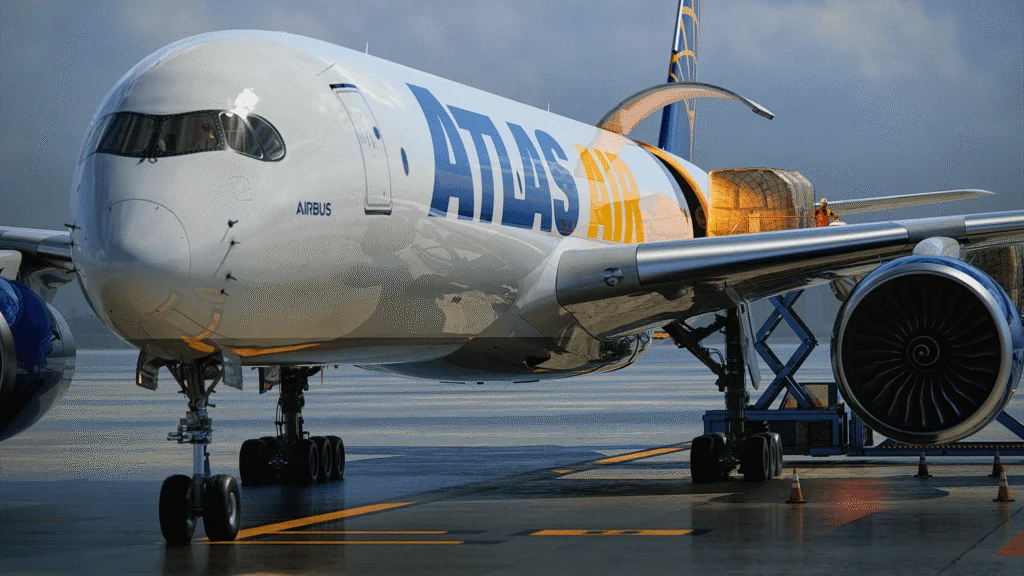
Atlas Air Worldwide has taken a significant step in strengthening its long-term cargo strategy by placing a major order for Airbus A350 freighter aircraft. The deal marks one of the most notable widebody freighter commitments in recent years and reflects growing confidence in the future of global air cargo demand. As supply chains continue to evolve and e-commerce volumes remain strong, operators are investing in next-generation aircraft to improve efficiency and expand network capability.
The Airbus A350F offers advanced fuel efficiency, extended range, and improved payload capacity compared to older freighter platforms. For Atlas Air, integrating these aircraft into its fleet will support long-haul cargo operations while reducing operating costs and emissions intensity. The order also aligns with broader industry trends where cargo carriers are transitioning away from converted freighters toward purpose-built aircraft that can better meet future regulatory and environmental requirements.
The decision highlights how air cargo is no longer seen as a secondary revenue stream but as a core pillar of aviation strategy. With global trade patterns shifting and demand for time-sensitive logistics increasing, freighter fleets are becoming more critical to airline resilience. Atlas Air’s investment signals a long-term view of cargo growth, particularly on intercontinental routes where efficiency and reliability are essential.
Aerolyceum supports airlines and cargo operators in evaluating fleet expansion strategies, aircraft selection, and network optimization. As investments in next-generation freighters increase, we provide insight into market demand, operational performance, and long-term strategic alignment in the evolving cargo sector.
Image courtesy @ AviTrader
Copywrite Ownership : AeroLyceum Consultancy